Adopt these six communication practices to keep subject-to (Sub-To) deals performing and prevent cascade failure across your portfolio.
- Set clear expectations early: Define communication frequency, primary contacts, and required documents at origination.
- Borrower-first listening: Let borrowers express concerns before delivering technical updates.
- Single source of truth: Centralize all templates and communication logs to reduce regulatory risk and inconsistent messaging.
- Stage-by-stage cadence: Weekly status during underwriting, daily near closing, biweekly post-funding for 90 days.
- Human-in-the-loop automation: Automate routing and logging; require human review before sending messages that change legal or payment terms.
- Documented escalation rules: Define who gets notified, within what timeframe, and what corrective action follows.
The American Association of Private Lenders (AAPL), HousingWire borrower-experience guidance, and CR Equity Ai Inc’s platform capabilities converge on the same conclusion: structured, proactive outreach is the single most reliable control against deal failure in Sub-To financing.
Table of Contents
- Why does poor lender communication cause deal cascade in Sub-To deals?
- Core principles every Sub-To lender should apply consistently
- What does a practical stage-by-stage communication framework look like?
- Reusable templates and scripts for key loan stages
- Regulatory and recordkeeping requirements for Sub-To communications
- How should you use AI automation safely in lender communications?
- Which KPIs measure communication effectiveness and catch problems early?
- Scenario playbooks for common Sub-To deal problems
- A 30/60-day checklist to implement these practices
- Key Takeaways
- Why communication discipline is the real underwriting variable
- CR Equity Ai Inc: built for the communication discipline Sub-To deals require
- Useful sources
Why does poor lender communication cause deal cascade in Sub-To deals?
Sub-To financing, formally known as subject-to financing, transfers property control while leaving the existing mortgage in the seller’s name. That structural gap between legal ownership and payment responsibility creates a narrow margin for error. A single missed communication, an unverified payment, or an unresolved insurance gap can trigger servicer scrutiny, due-on-sale enforcement, or borrower disengagement.
The consequences of poor communication compound quickly:
- Delayed diligence: Missing documents stall underwriting and push closing timelines.
- Borrower silence: Without consistent check-ins, borrowers avoid disclosing problems until they become defaults.
- Increased due-on-sale scrutiny: Irregular payment patterns or insurance lapses attract servicer attention, raising enforcement risk.
- Regulatory exposure: Undocumented communications create audit gaps that amplify compliance liability.
A performing loan is rarely called due under a due-on-sale clause, but enforcement risk rises when payments are inconsistent or lender inquiries go unanswered. Structured communication is the primary control.
Core principles every Sub-To lender should apply consistently
Effective lender communication in Sub-To deals rests on a short set of operating principles that apply regardless of loan type or risk profile.
- Set expectations at origination: Confirm contact names, preferred channels, and document deadlines in writing before the deal closes.
- Borrower-first listening: Customer-centric communication begins with listening. Let borrowers state concerns before you deliver technical updates.
- Clarity and brevity: Every message should answer one question: what does the borrower need to do next, and by when?
- Channel consistency: Use the same channel for the same message type. Switching channels mid-deal creates confusion and audit gaps.
- Auditability: Log every material communication, including the channel, timestamp, and outcome.
- Consent and privacy: Capture written consent for electronic communication and store it with the loan file.
- Defined escalation boundaries: Document who owns escalation decisions and what response windows apply.
Tone matters as much as content. Empathetic, factual, and prescriptive language reduces borrower defensiveness. Replace “you failed to submit” with “we still need your insurance declaration page by Friday to keep the timeline on track.”
Pro Tip: Replacing accusatory phrasing with outcome-focused language (“we need X by Y to proceed”) reduces borrower defensiveness and improves voluntary disclosure rates in workout conversations.

What does a practical stage-by-stage communication framework look like?
Roles and ownership
| Role | Primary Responsibility |
|---|---|
| Originator | Sets initial expectations; owns seller/borrower relationship through application |
| Account Manager | Manages cadence from underwriting through closing |
| Servicer | Owns post-funding payment verification and routine borrower contact |
| Underwriting Lead | Responds to document queries; flags risk changes to account manager |
| Legal Counsel | Reviews escalated disputes, modification requests, and due-on-sale triggers |
Stage-by-stage cadence
| Stage | Frequency | Primary Channel |
|---|---|---|
| Application | Shortly after submission | Email + platform portal |
| Underwriting | Regular status update | |
| Diligence | As needed; at least every few days | Email + phone |
| Closing | Daily near closing | Phone + email |
| Post-funding (first several months) | Regular intervals | |
| Workout / default | Per escalation protocol | Phone + certified mail |
AAPL analysis confirms that consistent check-ins with structured updates prevent small issues from compounding into cascade failures. Scheduling these touchpoints in advance removes the decision of whether to reach out.
Escalation flow
- Account manager identifies a missed milestone or unanswered query.
- Account manager sends a follow-up within 24 hours via the borrower’s preferred channel.
- If no response within 48 hours, escalate to the underwriting lead and log the event.
- If unresolved within 72 hours, legal counsel is notified and a corrective action memo is drafted.
- All escalation steps are logged in the platform audit trail with timestamps.
Reusable templates and scripts for key loan stages
Confirm the loan’s balance, rate, monthly payment, and servicer identity before any outreach. These facts shape every message you send.
Lead outreach
Subject: Your property at [Address] — quick question on existing financing
Body: “We’re reviewing your property and want to confirm a few details about the current loan before we put together an offer. Can we connect for 10 minutes this week?”
Document request
Subject: [Loan ID] — insurance declaration page needed by [Date]
Body: “To keep your closing on schedule, we need the insurance declaration page for [Address] by [Date]. Please upload it to your portal or reply with the attachment.”
Underwriting update
Subject: [Loan ID] — underwriting status update
Body: “Your file is in underwriting. We expect a decision by [Date]. No action needed from you today.”
Pre-closing logistics
Subject: [Loan ID] — closing checklist for [Date]
Body: “Closing is confirmed for [Date]. Attached is your final checklist. Please confirm receipt and flag any questions by [Date minus 2 days].”
Payment confirmation (post-funding)
Subject: [Loan ID] — first payment verified
Body: “We’ve confirmed your first mortgage payment was received by the servicer on [Date]. Your next payment is due [Date].”
Workout outreach
Subject: [Loan ID] — let’s talk through your options
Body: “We want to understand your situation before we discuss next steps. Can we schedule a call this week?”
For difficult conversations, open by asking the borrower to describe what happened. Confirm the facts you heard back to them, then state the next required action and deadline. This sequence, drawn from borrower-centric communication guidance, builds trust and reduces resistance.
Pro Tip: Auto-populate only safe, verified fields: borrower name, loan ID, property address, and next milestone date. Never auto-populate payment amounts or legal terms without human review.
Regulatory and recordkeeping requirements for Sub-To communications
Every Sub-To communication program needs a documented recordkeeping structure. Required items include:
- Authorization to Release (ATR): Secure this early. It permits information sharing with investors but must not be used to prompt unnecessary servicer inquiries.
- KYC/AML verification records: Document identity verification and store with the loan file.
- Consent logs: Written consent for electronic communication, timestamped and stored.
- Message archive: All material communications logged with channel, timestamp, and outcome.
- Payment verification records: Confirmation of the first 2–3 post-close payments, verified manually.
- Insurance transfer documentation: New policy accepted before old policy is canceled; refund routing documented.
Centralizing templates and audit logs reduces both regulatory risk and the likelihood of inconsistent messaging across channels. A single source of truth means every borrower receives the same factual content regardless of which team member sends the message.
Pro Tip: Retain all material loan communications for a minimum of three years post-payoff, or longer if your state’s statute of limitations for contract disputes requires it. Confirm the applicable retention window with legal counsel for your jurisdiction.
For a detailed breakdown of compliance obligations in real estate lending, the compliance guide for real estate loans covers regulatory requirements and operational controls in depth.
How should you use AI automation safely in lender communications?
Automation accelerates workflows, but unsupervised outreach in sensitive scenarios creates compliance and relationship risk.
Do automate:
- Template routing and delivery for standard status updates
- Document request reminders at defined intervals
- Audit log entries for every outbound message
- KYC/AML verification workflows
Do not automate without human review:
- Any message that changes payment terms, legal obligations, or loan status
- Workout or default outreach
- Responses to borrower disputes or modification requests
- Insurance transition communications
CR Equity Ai Inc’s platform combines automated document intelligence, configurable templates, audit logging, and real-time lender matching within a single workflow. These features reduce manual effort while preserving the human oversight that sensitive communications require.
Pro Tip: Stage AI-suggested personalization: let the system draft the message, but require a human to approve any variable field that touches legal terms, payment amounts, or borrower-specific risk data before the message sends.
Which KPIs measure communication effectiveness and catch problems early?
Track these indicators on a weekly operations dashboard:
- Response time: Target under 24 hours for underwriting queries; under 4 hours near closing.
- Information completeness rate: Percentage of document requests fulfilled by the stated deadline.
- First-contact resolution: Percentage of borrower queries resolved without escalation.
- Missed-docs rate: Frequency of incomplete submissions at each stage.
- Payment transition verification rate: Percentage of first post-close payments manually confirmed within 5 business days.
- Borrower satisfaction score: Collected at closing and at the 90-day post-funding mark.
The operations lead reviews these metrics weekly. Any KPI that breaches its threshold triggers a team huddle within 48 hours. Communication KPIs should feed directly back to the underwriting lead so that recurring documentation gaps can be addressed at the underwriting workflow level, not just the servicing level.
Scenario playbooks for common Sub-To deal problems
Timing and escalation table
| Scenario | Immediate Action | Owner | Escalate If |
|---|---|---|---|
| Late payment transition | Verify payment status with servicer; contact borrower | Servicer | No confirmation within 5 days |
| Insurance transfer problem | Confirm new policy accepted; do not cancel old policy | Account Manager | Lender notified of lapse |
| Title recording delay | Contact title company; request updated timeline | Originator | Delay exceeds 10 business days |
| Borrower dispute / modification request | Let borrower state concern; document in full | Account Manager | Legal terms are in question |
Late payment transition: Verify payment receipt with the servicer via email or portal (not phone). Contact the borrower within 24 hours if unconfirmed. Message: “We need to confirm your first payment was received. Can you provide your payment confirmation number by [Date]?” Manually verifying the first 2–3 payments is standard practice to prevent defaults and reduce servicer scrutiny.
Insurance transfer: Follow the strict sequence: new policy accepted before old policy is canceled. Use email or the servicer portal rather than phone to minimize unnecessary inquiries. Message: “Please confirm the new policy number and effective date so we can complete the transfer documentation.”
For construction draws and performance-based milestones, a construction loan broker in Collier County can provide local closing logistics support when title or insurance issues require in-market coordination.
Title recording delay: Contact the title company in writing. If the delay exceeds 10 business days, escalate to legal counsel and notify the borrower with a revised closing timeline.
Borrower dispute: Open by asking the borrower to describe the issue in full. Confirm what you heard, then state the next required action. Document the entire exchange in the audit log before responding with any proposed resolution.
A 30/60-day checklist to implement these practices
Owner assignment
| Task | Owner | Target |
|---|---|---|
| Assign communication roles | Operations Lead | Day 1 |
| Configure template library | Platform Admin | Day 7 |
| Enable audit logging | Platform Admin | Day 7 |
| Set cadence schedule | Account Manager | Day 10 |
| Train staff on escalation protocol | Operations Lead | — |
| Run pilot on one active loan | Account Manager | Day 30 |
| Review KPIs and adjust cadence | Operations Lead | Day 60 |
30-day priorities:
- Secure ATR for all active Sub-To files.
- Confirm KYC/AML records are complete and stored.
- Configure at least four core templates (doc request, underwriting update, payment confirmation, workout outreach).
- Verify first post-close payments manually for any loan funded in the past 30 days.
60-day success criteria:
- 90% of first post-close payments verified within 5 business days.
- Under 24-hour response time for underwriting queries.
- Zero unlogged material communications.
- Borrower satisfaction score collected at closing for all new loans.
For integration with loan servicing, payment forwarding, and insurance workflows, the real estate credit application process guide covers the full origination-to-servicing handoff in operational detail.
Key Takeaways
Structured, proactive communication is the single most reliable control against cascade failure in Sub-To financing, and it requires defined roles, centralized templates, and documented escalation rules to function consistently.
| Point | Details |
|---|---|
| Set expectations at origination | Define contacts, frequency, and required documents before closing to prevent downstream gaps. |
| Centralize templates and logs | A single source of truth reduces regulatory risk and prevents inconsistent messaging across channels. |
| Verify first payments manually | Confirm the first 2–3 post-close payments within 5 business days to prevent defaults and servicer scrutiny. |
| Human-in-the-loop for AI outreach | Require human approval before any automated message that changes legal or payment terms. |
| CR Equity Ai Inc | The platform’s automated document intelligence, configurable templates, audit logs, and real-time lender matching map directly to these best practices. |
Why communication discipline is the real underwriting variable
The conventional view is that Sub-To risk lives in the due-on-sale clause. That framing misses the more common failure mode: a borrower who stops communicating, a payment that goes unverified for two weeks, and a servicer inquiry that arrives before anyone on the lending team knows there is a problem.
The practices in this article are not procedural overhead. They are the operational layer that keeps a performing loan performing. Cadence, escalation rules, and centralized templates do not add friction. They remove the ambiguity that causes friction. A borrower who receives a consistent, factual status update every week is far less likely to go silent when something goes wrong.
The platforms that get this right are the ones that treat communication as a credit control, not a customer service function. That distinction changes how you staff it, how you measure it, and how you build it into your technology stack.
CR Equity Ai Inc: built for the communication discipline Sub-To deals require
Faster decisions and fewer compliance gaps come from connecting your communication workflows directly to your underwriting and document intelligence systems. CR Equity Ai Inc delivers automated document intake, configurable message templates, full audit logging, and real-time lender matching in a single platform, so your team spends less time chasing confirmations and more time closing.
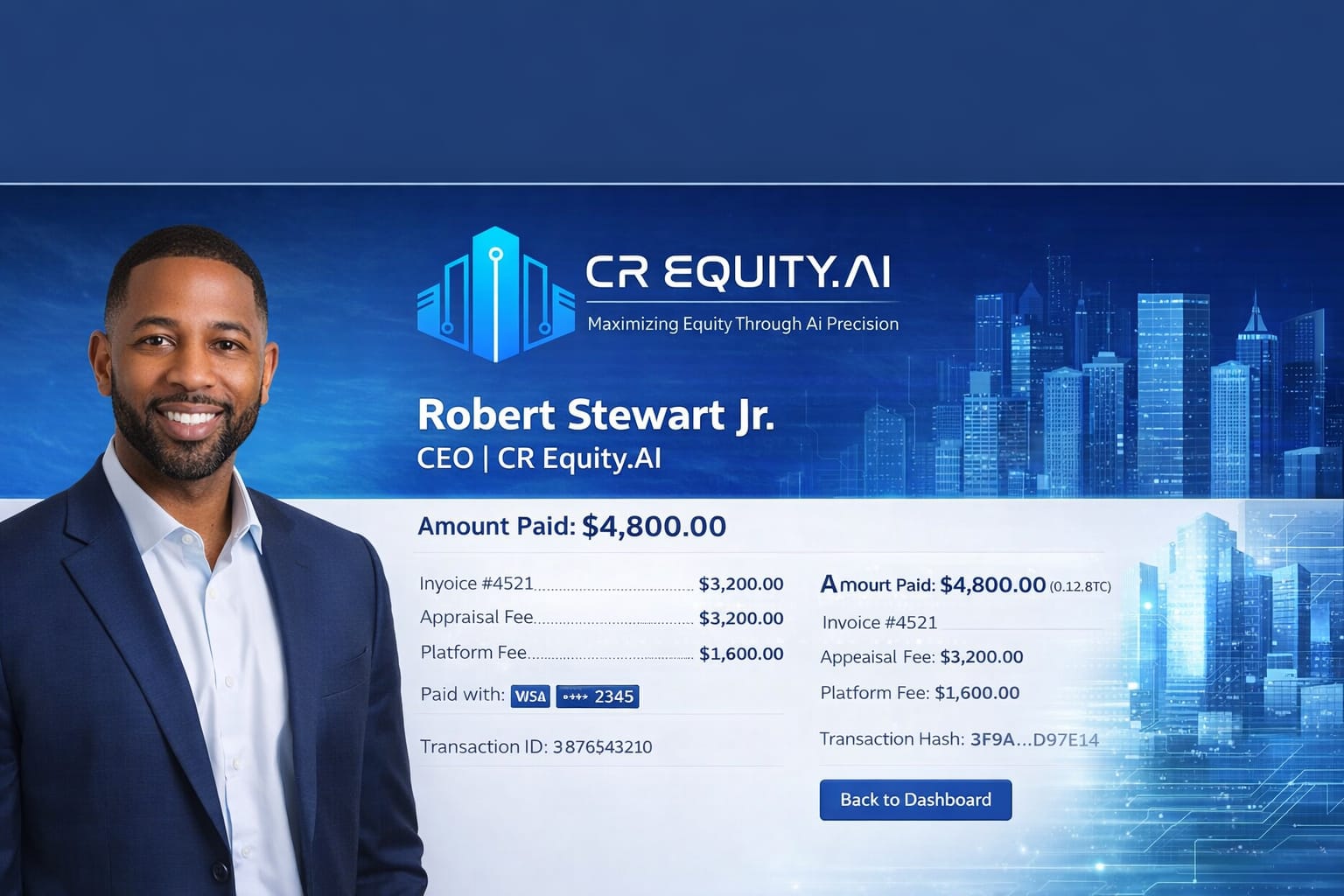
The platform’s KYC/AML automation and payment verification workflows map directly to the recordkeeping requirements covered in this article. Every message sent through the platform is logged, timestamped, and retrievable, giving your operations team the audit trail regulators expect.
Get a loan quote or review the full range of CRE and business financing programs to see where CR Equity Ai Inc fits your next deal.
This article provides general operational guidance and does not constitute legal, financial, or compliance advice. Confirm applicable regulations and retention requirements with qualified legal counsel for your specific situation.
Useful sources
- Stop the Cascade with Conversation | American Association of Private Lenders — Kemra Norsworthy’s guidance on proactive communication, structured check-ins, and preventing cascade failures in private lending.
- Five keys to effective communication with borrowers | HousingWire — Borrower-centric communication techniques, including the listen-first approach for workout and modification conversations.
- Omnichannel borrower communication in loan servicing | Cincom — Template centralization and audit log governance for omnichannel lending operations.
- Subject-To Real Estate Investing: The Complete Guide | Gold Key TC — ATR requirements, payment forwarding protocols, and first-payment verification standards for Sub-To deals.
- How to Insure a Subto Property | Creative TC — Insurance transfer sequencing and servicer communication protocols to avoid lender notification.
- Subject-To Leads: How to Find & Close Sub-To Deals | EquityTier — Pre-outreach data checklist: confirming loan balance, rate, payment status, and servicer before opening the seller conversation.
- Subject-To Real Estate: How It Works in 2026 | Deal Run — Due-on-sale enforcement risk analysis and exit planning guidance for performing Sub-To loans.